
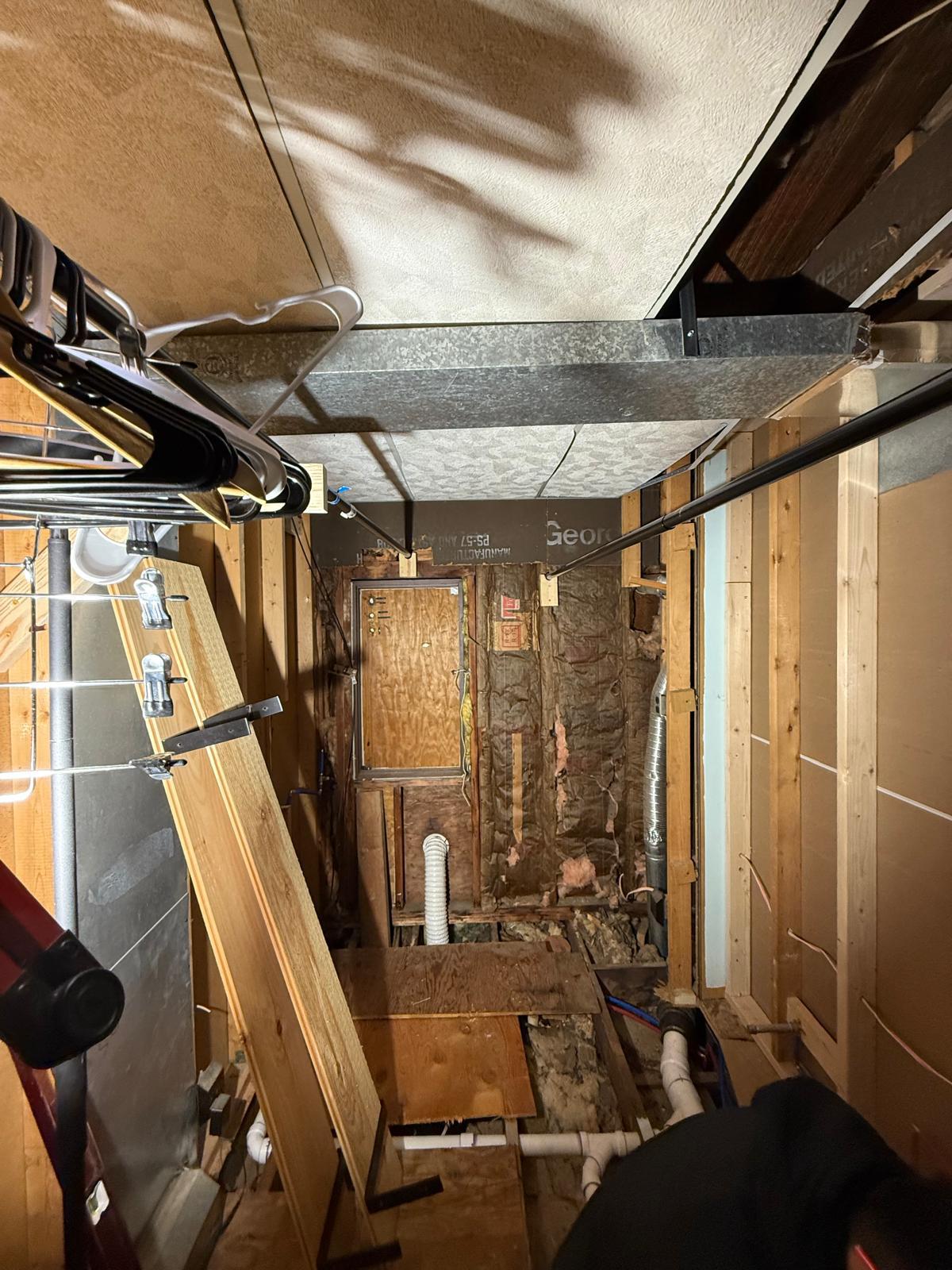
Water-damaged drywall is one of the most frustrating problems Maryland homeowners deal with at some point. Whether the damage came from a roof leak, a burst pipe, an overflowing bathtub, basement flooding, ice dam runoff in winter, or a slow hidden leak behind a wall, water damage rarely fixes itself. Left unaddressed, soaked drywall sags, stains, grows mold, and weakens the framing structure behind it.
How to Identify the Extent of Water Damage in Drywall
Start by looking for the obvious signs: water stains, bubbling paint, sagging sections, soft spots when pressed, and a musty smell. Brown rings or yellow stains usually indicate a slow leak from above. Bulging or sagging means the drywall has absorbed significant water and lost structural integrity. Use a moisture meter or simply press on the drywall with your hand. If it feels soft, mushy, or gives way under light pressure, the panel is damaged and likely needs replacement. Check the surrounding area too. Water travels along studs, joists, and insulation, so the visible damage is often smaller than the actual affected area. Pull back nearby trim or remove a small section to inspect.
When to Patch vs When to Replace the Drywall
Small water stains with no sagging and no soft spots can often be sealed, primed, and repainted. If the drywall is still firm and dry to the touch after at least 48 hours of drying, you may be able to patch and paint. However, if the drywall is bulging, crumbling, soft, moldy, or has been wet for more than two to three days, replacement is the safer choice. Replacing a section is also better when the damaged area is larger than a few square feet, when ceiling drywall is affected, or when you suspect mold growth behind the wall. Patching a structurally compromised panel may save time today but often leads to a bigger drywall repair later.
Patch & Paint
- Light surface stain only
- Drywall still firm to the touch
- Fully dry after 48 hours
- Damage under a few square feet
- No mold or musty smell
Replace
- Drywall is soft, bulging, or crumbling
- Wet for more than 2–3 days
- Visible mold or strong musty smell
- Ceiling drywall affected
- Damage over a few square feet
The Proper Drying Process Before Any Repair
Before any drywall repair starts, the entire affected area must be completely dry. Fix the water source first, whether that is a plumbing leak, roof issue, or appliance malfunction. Use fans, dehumidifiers, and open windows to dry the space. In Maryland's humid climate, this often takes three to seven days for fully soaked drywall. Remove any wet insulation, since wet insulation traps moisture against framing and drywall and prevents proper drying. If you skip this step and install new drywall over a damp cavity, mold will grow inside the wall and you will be reopening the same area within months. A moisture meter is the most reliable way to confirm the framing is dry enough to close up.
What to Expect From a Maryland Drywall Repair Project
A typical Maryland drywall repair project includes removing damaged sections, replacing wet insulation if needed, installing new drywall, taping seams, applying multiple coats of joint compound, sanding smooth, and matching the original wall texture. Most homes have either a smooth finish, knockdown texture, or orange peel texture, and matching it correctly is what makes the repair invisible. Once the drywall is finished, the area is primed and painted to blend with the surrounding wall. A single-room ceiling repair usually takes two to four days from demolition to final paint. Larger projects involving multiple rooms or extensive water damage may take a week or more.
Drywall Repair Steps
- Stop the water source first
- Dry the cavity completely (3–7 days)
- Remove damaged drywall and insulation
- Install new drywall and tape seams
- Apply multiple coats of joint compound
- Match existing texture exactly
- Prime and paint to blend with surrounding walls
Frequently Asked Questions
How long does it take for drywall to dry after water damage?
In Maryland's humid climate, fully soaked drywall takes three to seven days to dry with fans and dehumidifiers running. Light surface moisture may dry within 24 to 48 hours. A moisture meter confirms when the area is truly dry enough to repair.
Do I need to replace the drywall or can it be saved?
Drywall that is bulging, crumbling, soft, or moldy must be replaced. Drywall with light surface staining that is firm and fully dry can often be primed, sealed, and repainted. A professional inspection is the safest way to decide.
How much does drywall water damage repair cost in Maryland?
Cost varies based on the size of the damaged area, whether insulation needs replacement, ceiling vs wall repair, and texture matching complexity. A licensed Maryland drywall contractor will provide a written estimate after inspecting the damage.
Should I worry about mold after water damage to drywall?
Yes. Mold can begin growing in damp drywall within 24 to 48 hours. If drywall has been wet for more than two days, mold testing is recommended. Visible mold or a strong musty smell means the area should be inspected by a remediation professional.
Can I paint over water-stained drywall?
Only if the drywall is fully dry and structurally sound. Use a stain-blocking primer first to prevent the stain from bleeding through. Without a primer, water stains will reappear through even multiple coats of paint within weeks.